Choice of materials to combat the urban heat
The material catalog "Building materials for cities in a changing climate" is now available in an expanded new edition. It shows how the right choice of materials can specifically influence heat stress, urban climate and quality of stay in densely built-up areas and provides planners with a practical tool.
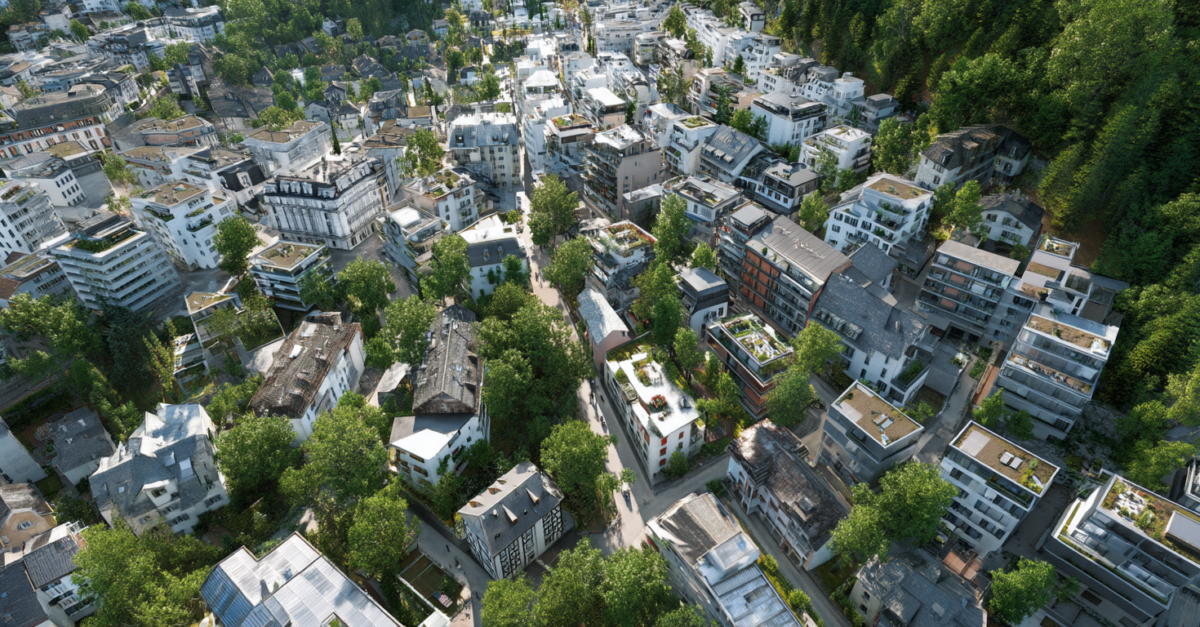

Switzerland is heading for hotter summers, more hot days and more frequent extreme weather events. Cities and densely populated areas in particular heat up more than their surrounding areas and cool down more slowly at night – the well-known heat island effect. It is directly related to the way buildings are constructed; dense sealing, dark surfaces and solid structures store heat and only release it again with a delay.
Because buildings and infrastructures stand for decades, the materials used today shape the microclimate of tomorrow. This makes the choice of materials a strategic decision. It influences not only energy requirements and comfort in the building, but also health and quality of stay in public spaces.
What the new edition does
This is where the second, expanded edition of the materials catalog comes in. The reference work from the Federal Office for Housing shows how different building materials influence the outside temperature and what contribution they make to a heat-resilient urban climate.
The catalog compares common outdoor materials such as floor coverings, facades and now also roofs and greenery in dry and wet conditions. In addition to the effect on the ambient temperature, it takes into account additional properties such as reflection of solar radiation, durability and, in the case of coverings, infiltration capacity. This creates an overall picture that combines thermal, functional and water management aspects.
Updated method, comparable results
The new edition is based on simulations carried out by the University of Applied Sciences Northwestern Switzerland on behalf of the Swiss Federal Office of Energy and the BWO. The materials already included in the first edition were also recalculated using improved simulation software.
As a result, all results are based on a uniform methodological standard and can be directly compared with each other. For planners, this means that they can compare variants qualitatively and quantitatively and better justify their decisions to clients and authorities.
Tool for planning and implementation
The material catalog is designed as a practice-oriented reference work for new buildings and renovations in densely built-up areas. It supports specialist planners and property developers in integrating the effect of material selection on heat development into their processes at an early stage, from the project idea to detailed planning.
In combination with other instruments for climate-adapted urban development, the catalog becomes a building block for heat-resilient districts. It helps to brighten surfaces in a targeted manner, utilize evaporation capacity, improve infiltration and thus gradually make the urban climate more robust in the face of climate change.