Canton of Zurich continues to grow
At the end of 2025, 1.63 million people lived in the canton of Zurich, around 13,000 more than a year earlier. Growth remains clearly positive, but is slowing down and is more concentrated in cities, well-connected regions and the foreign population from Europe.
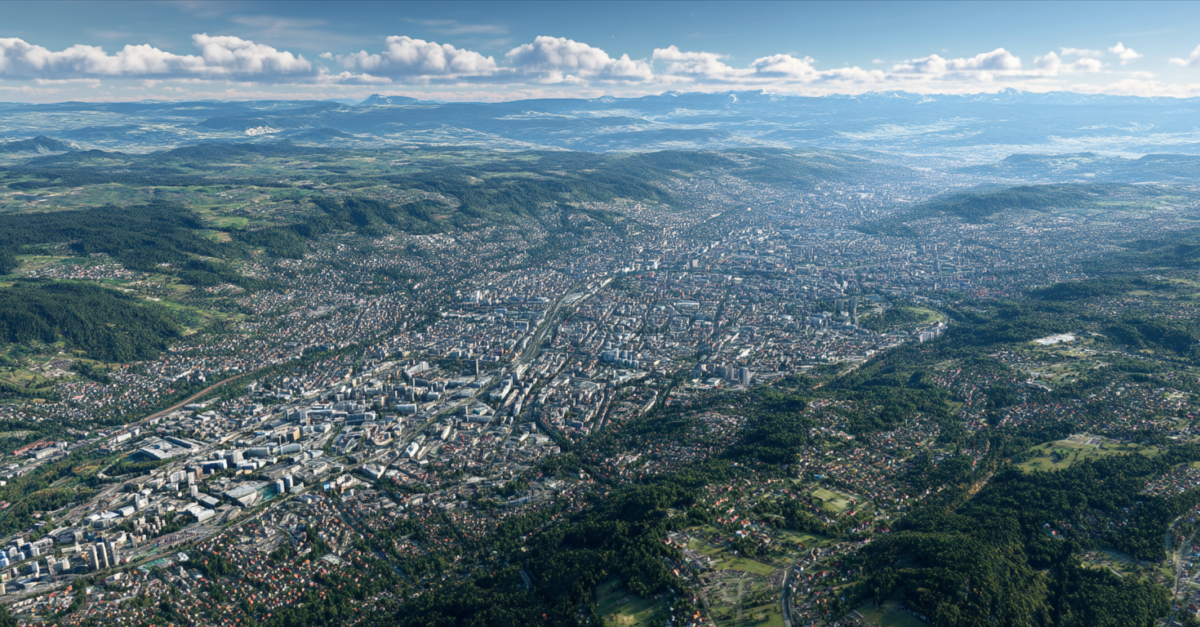

The canton of Zurich continues to grow, but the major growth spurt of recent years is over for the time being. At the end of 2025, the civil resident population was 1,628,081 – an increase of just under 13,000 residents or 0.8 per cent compared to the previous year. Apart from the coronavirus years, this is the smallest increase since 2005 and thus a clear sign of a phase of more moderate momentum.
Immigration most important growth driver
Population growth continues to be driven primarily by immigration from abroad. Over 80 per cent of the increase is attributable to people of foreign nationality settling in the canton for the first time. Although net migration from abroad has fallen slightly compared to the previous year, it has returned to roughly the same level as before the war in Ukraine. The internal migration balance with the other cantons remains slightly negative and has hardly changed for several years. Zurich is losing about as many people within Switzerland as it is gaining.
Births and deaths
The birth balance accounts for less than a fifth of growth. Although initial estimates show a slight increase in births and a slightly lower number of deaths, the overall surplus remains low. This confirms the trend that the population is growing primarily “from the outside”, while the demographic momentum within the country is levelling off.
Cities and small municipalities are growing the fastest
The spatial picture is divided into two parts. Cities with a population of over 10,000 account for more than two thirds of growth. The city of Zurich alone accounts for almost a third of the cantonal increase, growing by 4,008 people. It was followed by Dübendorf and Uster, while Winterthur recorded the weakest growth since the turn of the millennium with an increase of 355 people.
Relative to the size of the municipality, however, the small municipalities recorded the strongest growth. Flaach, Hüntwangen and Wila recorded growth rates of between 4 and a good 5 per cent, underlining the fact that even rural municipalities in the canton can benefit from the influx.
Regions are shifting
All regions in the canton are growing, but at different rates. Weinland and Furttal are leading the way with growth rates of 1.1 and 1.0 per cent respectively. Twice as high as in the Winterthur region, which will bring up the rear in 2025. While the areas close to the city in the north and east have recently seen above-average growth, the city of Zurich and the Limmat Valley are now above the cantonal average, while the Glattal and the Winterthur region are falling behind.
Foreign population strongly characterised by Europe
At the end of 2025, around 472,000 people of foreign nationality lived in the canton. This represents 29 per cent of the total population. Their number continues to grow, albeit at 1.5 per cent, the slowest rate since the introduction of full freedom of movement with the EU in 2007. Almost two thirds come from an EU or EFTA country, over 80 per cent from Europe.