Innovative materials in construction
In the Speakers Corner at Swissbau, ICSC Beton AG, KLARK, KohlenKraft and Timber Structures 3.0 showed how building materials are becoming active levers for the climate transition. From CO₂-storing concrete to large-scale wooden ceilings. The speakers presented concrete projects that demonstrate sustainability without breaking with proven construction processes in everyday life.
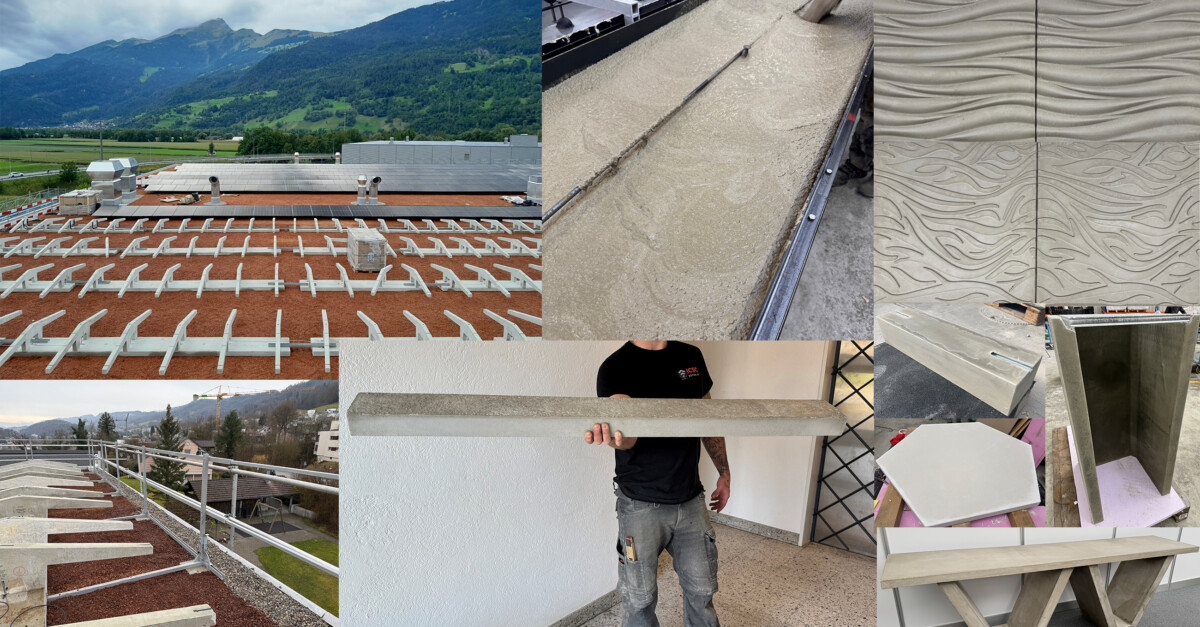
Lightweight concrete in a single pour
ICSC Beton AG presented prefabricated parts made from its own lightweight concrete based on expanded glass, which are significantly lighter than normal concrete. At the same time, they have good insulation values, frost resistance and fire protection. This material is used to produce prefabricated elements that speed up construction processes and increase quality on the construction site. One focus is on lightweight concrete elements that combine static function, integrated ballasting and simple installation of solar modules, thus enabling roof renovation and solar installation in a single step. For experts in the audience, it became clear how prefabrication, lightweight concrete and photovoltaics can be combined to create sophisticated system solutions. With less weight, fewer interventions in the roof and more energy yield per square metre.
Climate-neutral concrete on the construction site
KLARK demonstrated how CO₂-saving concrete is already being used in building construction today. Without additional work for the construction site and with an externally tested climate impact. The concrete is based on the addition of biochar from waste wood, which permanently binds the carbon and stores hundreds of kilograms of CO₂ per cubic metre in the structure of the concrete. Technically, it largely behaves like conventional concrete. It can be pumped or processed by crane and remains fully recyclable. The stored CO₂ is not released again during demolition. In the Speakers Corner, it became clear that this opens up the opportunity for clients and planners to make measurable contributions to net zero strategies using familiar construction methods without having to reinvent processes and roles on the construction site.
Climate additives for plaster and co.
KohlenKraft presented a climate-positive building material that permanently binds CO₂ in the building and at the same time offers advantages in terms of building physics. The centrepiece is a climate additive based on biochar, which can be mixed into mineral building materials such as plasters and coatings, turning building components into long-term carbon stores. In addition to CO₂ storage, the systems aim to improve the indoor climate and regulate humidity. This is an argument that has met with great interest, particularly in refurbishments and high-quality interior fittings. The message to manufacturers, planners and construction companies is that climate effects can be integrated directly into existing products without having to fundamentally change processing and detailed planning.thinking in concrete, building with wood
In the Speakers Corner, the TS3 technology used real projects to demonstrate how familiar design logic and a new timber construction technique come together. An important step in turning large-volume timber buildings from a pioneering project into an established option. Today, large-scale, biaxial load-bearing timber ceilings with column grids of up to 8 x 8 metres can be realised with a special end-face bonding of cross-laminated timber. Load-bearing structures that were long reserved for reinforced concrete. The panels are rigidly joined on site by grouting the joints with cast resin, resulting in beam-free, point-supported flat timber ceilings that can be treated like flat concrete ceilings in the design. For architects and engineers, this opens up great freedom in terms of floor plans and subsequent conversions, as non-load-bearing walls can be moved flexibly, while weight, construction time and carbon footprint are significantly reduced compared to concrete ceilings.