Heat protection on construction sites becomes a joint task
Periods of heat are increasingly posing major challenges for construction in Switzerland. Where individual hot days used to be the exception, they are now a permanent feature of summer. This has direct consequences for the health of employees and productivity on construction sites. Michael Walz, Head of QUS at the Swiss Association of Master Builders (SBV), makes it clear: "When the sun is blazing, there's no use complaining, only preparation." But heat protection means much more than just shady areas and water points.
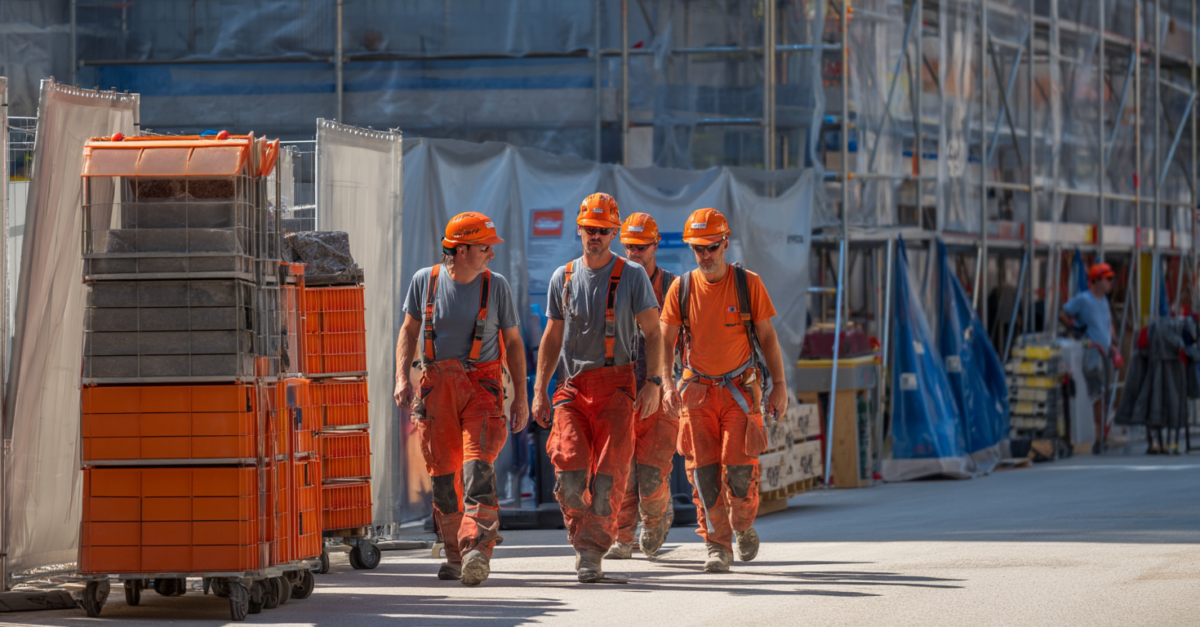
Switzerland is topographically diverse, from inner-city construction sites to alpine locations and large-scale infrastructure projects. Standardized measures therefore fall short. While earlier working hours are made possible in certain municipalities, other projects rely on mobile shading systems or adapted break regulations. The decisive factor is the adaptation to the respective region, the environment and the project type.
Shared responsibility of the building owner
Walz emphasizes that it is not only the task of construction companies to provide heat protection. Building owners and project authors can also implement effective measures through forward-looking planning and tendering. In doing so, they take responsibility for occupational safety and prevent discussions about additional costs. “If you address the issue at an early stage, you create clarity and commitment for everyone involved,” says Walz.
Cooperation at all levels
Close coordination between site management, foremen and employees is a key factor. Although employers have a legal duty to ensure health and safety, employees also have a role to play. They must actively use protective measures, seek out shady areas and use the aids provided. The Ordinance on Accident Prevention (VUV, Art. 11) obliges all parties to implement these measures.
Legal framework and challenges
Employers are already legally obliged to implement protective measures. Support is provided by Suva and SBV guidelines. Nevertheless, there are structural problems. If the work rhythm is adjusted due to a heatwave, delays occur that are not always covered by work contracts. The provisions of SIA standard 118, which provide for deadline extensions in the event of weather-related interruptions, are often waived. As a result, the risks end up with the construction companies and their employees. A practice that the SBC clearly criticizes.
Round table sends out signals
In order to develop viable solutions, the SBC joined forces with trade unions, client representatives such as KBOB, SBB, Astra and IPB as well as authorities and Suva at the “Heat Round Table”. In mid-May 2025, a consultative decision was taken to enshrine heat protection in the Construction Site Ordinance (BauAV), in KBOB and IPB recommendations and in the SIA 118 contract standard. This means that building owners and social partners are committed to taking health protection into account on a binding basis. It is now up to politicians to send a clear signal in the same direction.
Heat protection on construction sites is not just a matter for the boss; it requires the shared responsibility of all those involved, from the client, companies, site managers and employees. Only if everyone pulls together can the growing risks posed by rising temperatures be managed effectively. In times of climate change, heat protection is thus becoming an integral part of modern building culture and a decisive factor for occupational safety and fair framework conditions.