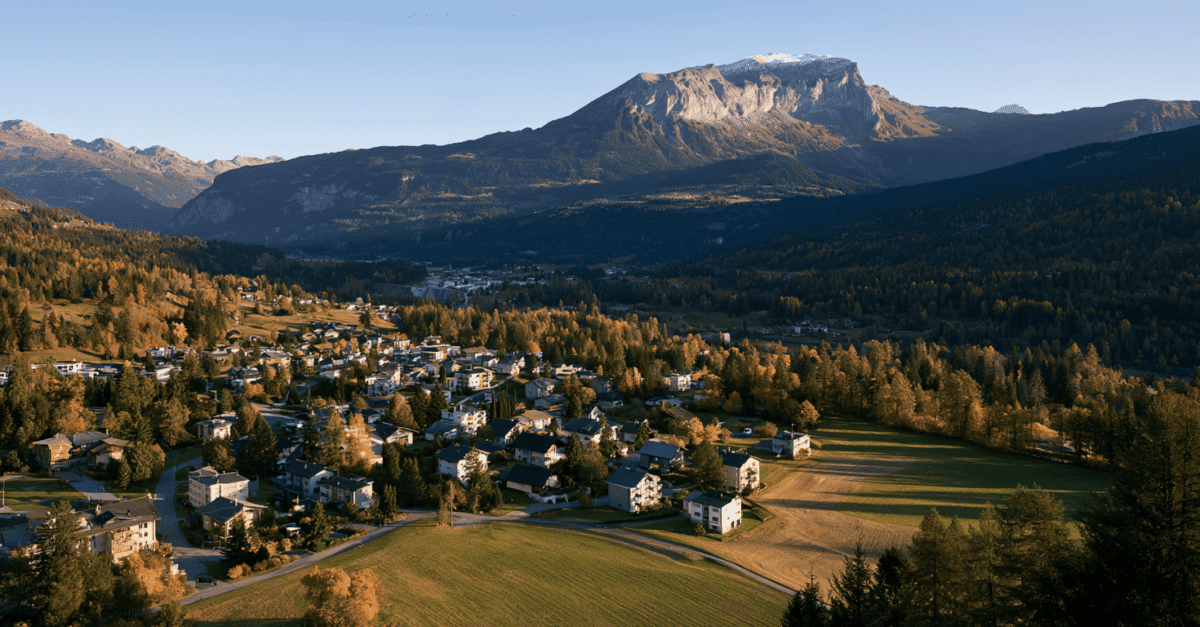

The government’s decision of 15 October 2026 brings into force a local authority proposal that brings Flims into line with the requirements of the revised spatial planning legislation. The key point is the reduction in the size of the residential, mixed-use and town centre zones by around 154,245 square metres. In addition, there are higher minimum densities, a moderate increase in gross floor area and guidelines for subsequent planning.
Inward development becomes mandatory
With this partial revision, Flims is responding to the first stage of the revised Spatial Planning Act, which aims to limit oversized building zones and steer settlement development inwards. This will have concrete implications for property owners in existing building zones. The municipality is introducing a building obligation with deadlines ranging from five to eight years, thereby increasing the pressure to actually utilise zoned land.
It is also worth noting what Flims is not doing. According to a government statement, the municipality is largely refraining from additional measures to mobilise building land in existing garden and surrounding areas. Rather than a blanket intervention, the revision therefore relies on a combination of rezoning, densification and the time-limited activation of existing reserves.
Strategy and digital foundations adapted
At the same time, the local plan has been adapted to the spatial development objectives set out in the ‘Spatial Strategy for the Future of Flims’. This strategy has served as the basis for the municipality’s Spatial Planning Act-compliant revision of the plan for several years now. Furthermore, the proposal has been aligned with the latest standards for official surveying and the requirements of digitalisation.
For the property and development sector, the Flims case is more than just a local planning measure. It demonstrates that tourism-oriented municipalities in Graubünden must not only formally review their building zones, but also visibly reduce reserves and allocate building land with clear deadlines. Anyone pursuing housing projects in Flims will therefore face tighter planning guidelines and, at the same time, greater pressure to focus on the internal development of existing building areas.