Owner participation “Ziegelbrückstrasse” in Glarus North
The municipality of Glarus Nord is setting new standards in residential development with a participatory planning process along Ziegelbrückstrasse. By involving the owners at an early stage, a framework plan is being created that not only enables structural densification, but also creates identity and planning security.
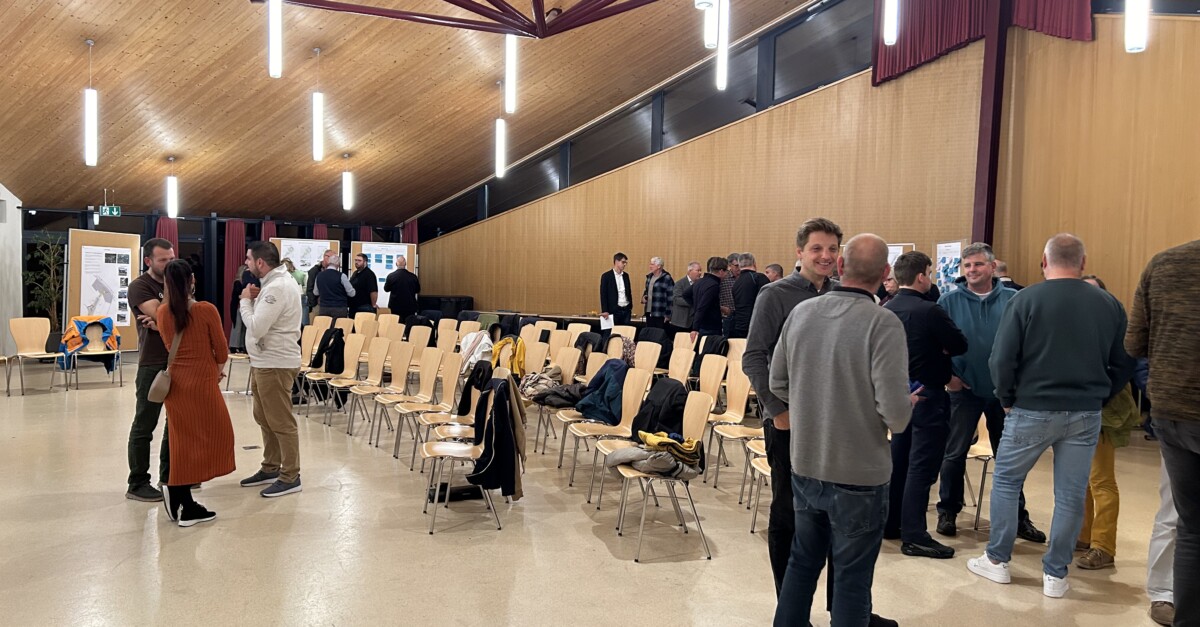
The municipality of Glarus Nord would like to motivate developers to carry out participatory processes for more complex construction projects. Its “Participation and communication guidelines for planning processes” outline how the needs of the population and future users can be anticipated at an early stage for various planning situations. To set a good example, the municipality initiated a participatory process for the “Ziegelbrückstrasse” development area between Ziegelbrücke railroad station, the Jennyareal and the village center of Niederurnen: between October 2024 and February 2025, it involved the affected owners in the development of a mission statement, which served as the basis for the development of an outline plan for the area.
Shaping the framework conditions for development
The mission statement was intended to define the structural dimensions and the mix of uses. As the area is one of the densification and upgrading areas that characterize the village, qualitative key points of a development that does justice to the character and history of the area were also up for discussion. The municipality also saw the public sector as having a duty and therefore set out its expectations regarding the design and upgrading of the cantonal road that runs through the area. This provided the municipality with a broad-based basis for discussions with the canton, which is responsible for the renovation of the road.
The jointly developed model served the municipality as the basis for a binding framework plan. The framework plan in turn defines the guidelines for how buildings may be constructed along Ziegelbrückstrasse in future under the new owner-binding land-use plan. The owners involved helped to shape how and what they can build on their properties in the future by participating in the master plan.
A streamlined participation process
The owners in the area were invited to take part in two evening events with the municipality. The first evening was for information and participation, the second for the presentation of the results. Over 56 owners of 127 plots took the opportunity to participate in the events themselves or with a representative.
In the first workshop, they were given an insight into the planned planning instrument and were consulted on various options for future development possibilities. By prioritizing the options, they were able to influence the decision on the desired model. In the second workshop, the municipality presented the framework plan developed on the basis of the desired variant.
A worthwhile effort for the municipality
Participatory processes are complex and cost time, money and political capital. For the municipality, the time-consuming process was worthwhile because it increases the chances of owners becoming active: By being informed about more construction options at an early stage, they can adjust their investment planning and align any existing intentions with the municipality’s development plans.
The discussion about the vision helps to orient owners towards a common vision of the future of the densification and development area and to convey to them that issues such as the addressing of buildings to the street, the granularity of the development, the design of the base storey or the materialization are not just private matters, but also have an effect on the image of the district and thus influence the attractiveness and value of the location for everyone.
The participatory process offered the municipality the opportunity to draw attention to its building advice and increase the likelihood that landowners with investment intentions will discuss and coordinate their plans with the municipality at an early stage, before they have drawn up a preliminary or construction project that can hardly be adapted. In the best-case scenario, the process encourages some owners to think bigger and enter into cooperation with other landowners or jointly tackle issues such as the provision of parking spaces in construction projects.
The municipality was also able to use the events to coordinate upgrades on public land with the needs and ideas of the owners and to test the acceptance of measures such as greened medians on the road or a speed reduction on certain road sections.
More planning security for landowners
Participatory processes also cost the participants time. In the case of Ziegelbrückstrasse, the effort was worthwhile for the property owners simply because they were able to influence decisions on issues that are binding for the property owners by participating in the framework plan that is binding for the authorities: the fundamental question of the design of the density and mix of uses possible with the new land use planning. The framework plan also offers owners more planning security, as it strengthens equal treatment in the approval process.
As part of the process, the owners gained a better understanding of what the municipality expects from structural developments and were able to gain inspiration as to what contributions they can make to neighborhood upgrading in addition to structural developments – for example with the design of gardens and street front zones or smaller renovation projects. The opportunity to find out about their neighbors’ plans at the event ultimately gives owners more certainty that they are not alone in their investments.
Guidelines for Participation and Communication in Planning Processes
The “Guidelines for Participation and Communication in Planning Processes” were developed by Zimraum on behalf of the municipality of Glarus North. They can be downloaded here.
https://zimraum.ch/projekt/leitfaden-partizipation-fuer-die-gemeinde-glarus-nord/