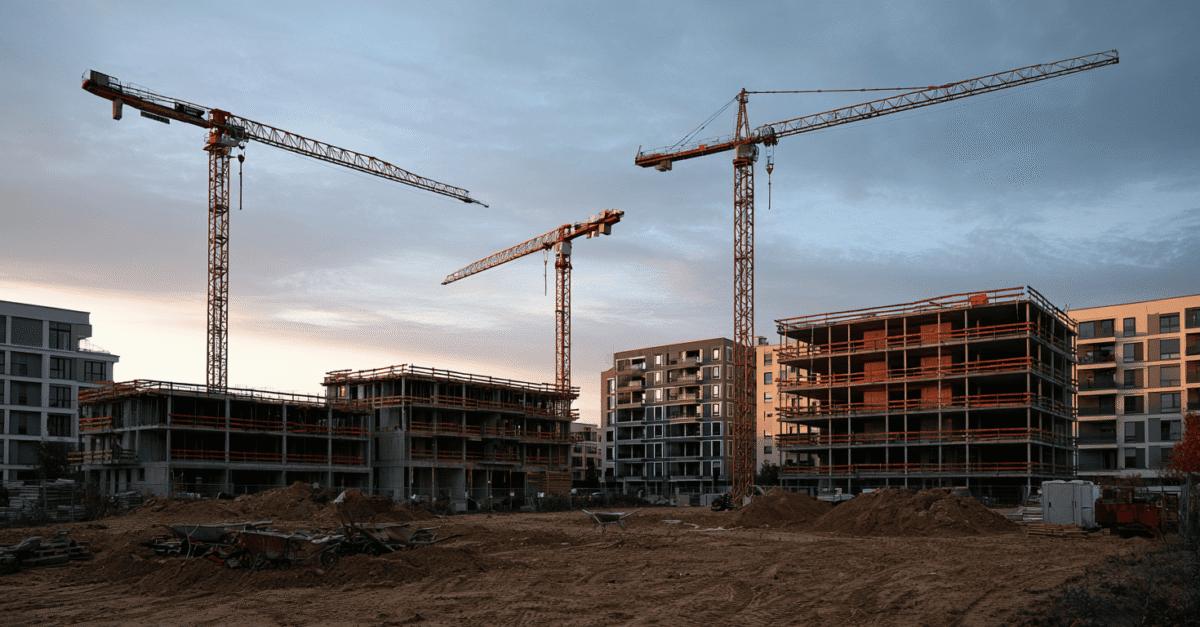

Between January and August 2026, 169,400 flats were granted planning permission in Germany. This was 12.1 per cent more than in the same period the previous year. In August alone, 20,600 flats were added, 6.8 per cent more than in August 2025. However, this growth is having little impact on the market because there remains a wide gap between planning permission being granted and construction starting.
This is now also reflected once again in the sector’s sentiment. The ifo Business Climate Index for housing construction fell in September from minus 22.5 to minus 25.1 points. At the same time, 41.3 per cent of companies reported a lack of orders, whilst the cancellation rate rose from 13.4 to 14.1 per cent.
Approved but not built
The bottleneck no longer lies solely with new planning permissions, but with the actual construction. According to industry figures, around 450,000 approved homes were on hold in Germany at the end of 2025. The construction backlog of approved but unbuilt flats cited by the construction industry stood at as many as 760,700 units. For owners, developers and construction firms, this means that additional planning permissions are unlikely to create any new supply in the short term.
Interest rates are weighing on profitability
Financing remains the key stumbling block. The European Central Bank raised its key interest rates again by 0.25 percentage points in September 2026. The deposit rate has stood at 2.5 per cent ever since. Higher financing costs are therefore worsening the financial outlook at precisely the stage when many projects from the construction backlog should actually be coming onto the market.
Funding gap looms
Additional pressure is coming from the funding side. KfW has extended the temporary EH55 funding scheme within the ‘Climate-Friendly New Build’ programme until the end of 2026 at the latest. By the end of September, over 50,000 residential units had been funded under this scheme. The sector is now pushing for a follow-up solution, as the new funding framework is not expected until mid-2027. As long as this gap remains, the rise in planning permissions is unlikely to provide any significant relief for the housing market.