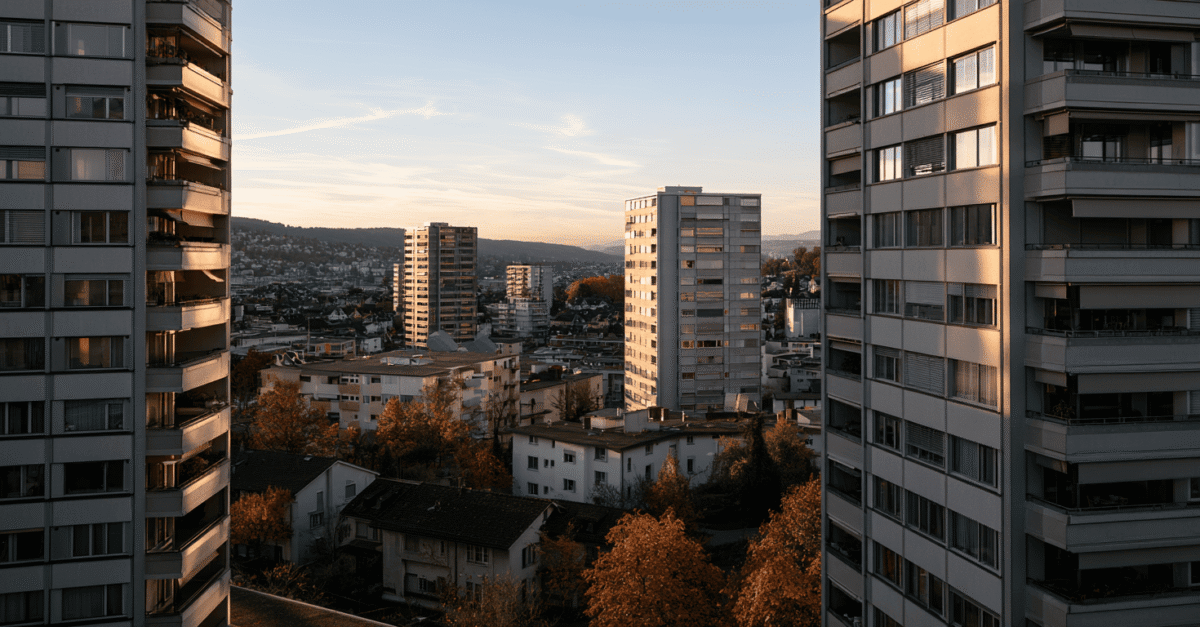

This slight upward trend is particularly noteworthy because, for years, the Zurich market had been moving in almost only one direction. In June 2026, there were 4,189 vacant flats in the canton. This represents 0.52 per cent of the housing stock, up from 0.48 per cent the previous year.
Zürcher Kantonalbank attributes this trend to two developments. Net immigration slowed in 2026, whilst at the same time new-build activity is picking up again. For the current year, the bank expects 8,500 new flats in the canton of Zurich, and around 9,000 for 2027. The additional supply is unlikely to resolve the shortage, but should gradually ease the pressure.
A turnaround, but no all-clear
Zurich is nevertheless still a long way from having a relaxed housing market. Even following the slight increase, the vacancy rate remains extremely low. In the city of Zurich too, the vacancy rate as at 1 June 2026 stood at just 252 flats, or 0.11 per cent of the stock. The ZKB therefore speaks only of an initial sign of a trend reversal. For newly advertised flats, it does not expect rents to fall, but merely less steep price increases than in previous years.
Existing tenants face renewed pressure later on
For owners, property managers and tenants, the second aspect of this development is particularly important. The reference mortgage interest rate has stood at 1.25 per cent since 2 September 2025 and has remained unchanged since 2 September 2026. As long as this rate remains stable, this mechanism will not result in any new general increase in existing rents. However, ZKB expects another rise towards the end of 2027. Subject to the legal requirements, landlords could then increase existing rents by around three per cent.
More construction helps, but is not yet enough
For project developers and building owners, the message is clear. Additional completions are beginning to ease pressure on the market, but the reserve remains extremely thin. Even small increases in demand could dampen this effect again. This is precisely why it will be crucial whether the expected completions in 2027 actually materialise and whether immigration remains at a lower level.