
With the end of the public consultation period, opposition to Zingel III has come to light. The municipality of Schwyz has confirmed seven objections to the partial revision of the land-use plan for the expansion of the quarry in Seewen. The identities of those who submitted the objections and the specific issues they raised have not been disclosed.
The consultation period ran from 27 August to 28 September 2026. According to the municipality, the objections will now be examined, after which further planning and approval will take place in consultation with the municipal council. It is also clear from the project documents and information provided by the operator that, ultimately, the municipal assembly – or rather the electorate – will also have a say in the planning framework.
Reserves will only last a few more years
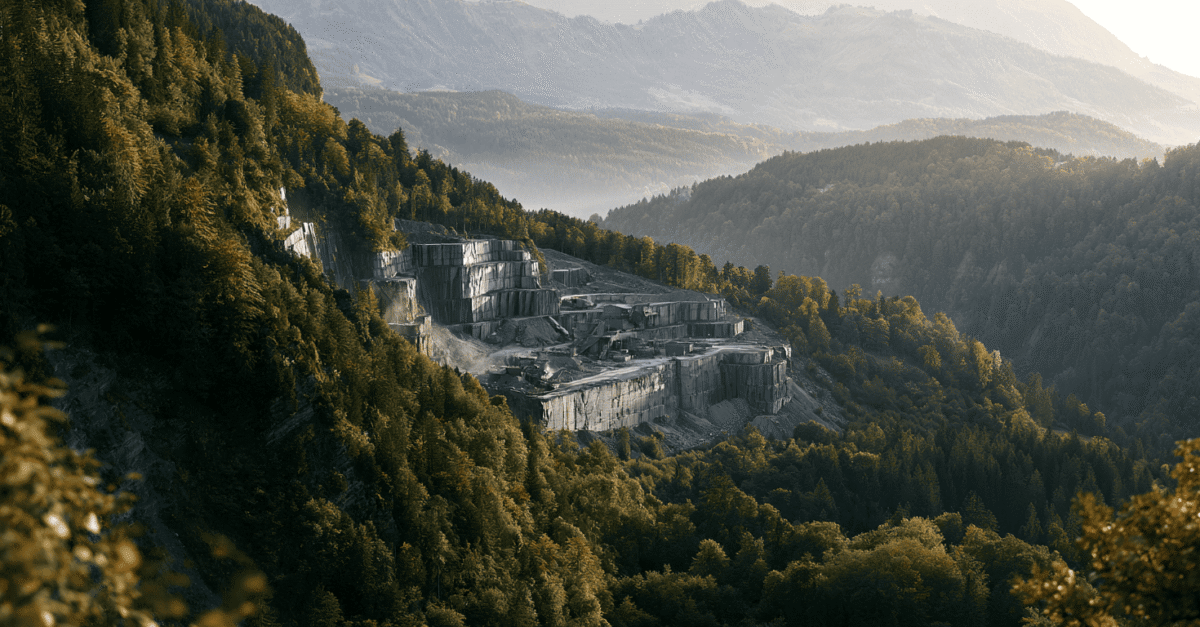
The second phase of quarrying is currently underway at the Zingel quarry. According to the planning documents, the authorised reserves are expected to be exhausted around the year 2030. This is precisely where the economic significance of the issue lies. Zingel III is intended to extend quarrying south-west of the current pit, thereby securing the supply of hard rock for the coming decades.
According to the operator, the planned third phase involves the extraction of around five million cubic metres of hard rock over a period of approximately 50 years. The material is used, amongst other things, for SBB railway ballast and for high-quality road surfacing. For the construction industry and transport infrastructure in the region and beyond, the site is therefore more than just a local raw materials project.
Landscape conservation makes the project a sensitiveissue
However, it is precisely this long-term security of supply that conflicts with the protected area. The planned expansion area overlaps with landscapes of national importance listed in the Federal Inventory of Landscapes, Nature and Cultural Heritage (BLN). KIBAG itself describes Zingel III as one of its most complex resource projects, citing geological, landscape and forestry considerations. According to the company, tree felling is also planned to facilitate development on steep terrain.
This case is doubly relevant to the property and construction sectors. On the one hand, it demonstrates how early on the raw material base for concrete, road construction and infrastructure must be secured in the planning stage. On the other hand, the process highlights how quickly security of supply, land-use planning and landscape conservation come into direct conflict in large-scale quarrying projects. The next test will come as soon as the local authority and politicians consider the substance of the seven objections.