
In 2025, 516.4 million Swiss francs were allocated through the Building Program, with additional funds coming from the Incentive Program, which began on January 1, 2025. As a result, the total amount of funding committed to energy-efficiency measures for buildings rose to 636.4 million Swiss francs last year. For owners and renovation planners, this is more than just a budget figure, because the government is using it primarily to accelerate the implementation of heating system replacements and building envelope renovations.
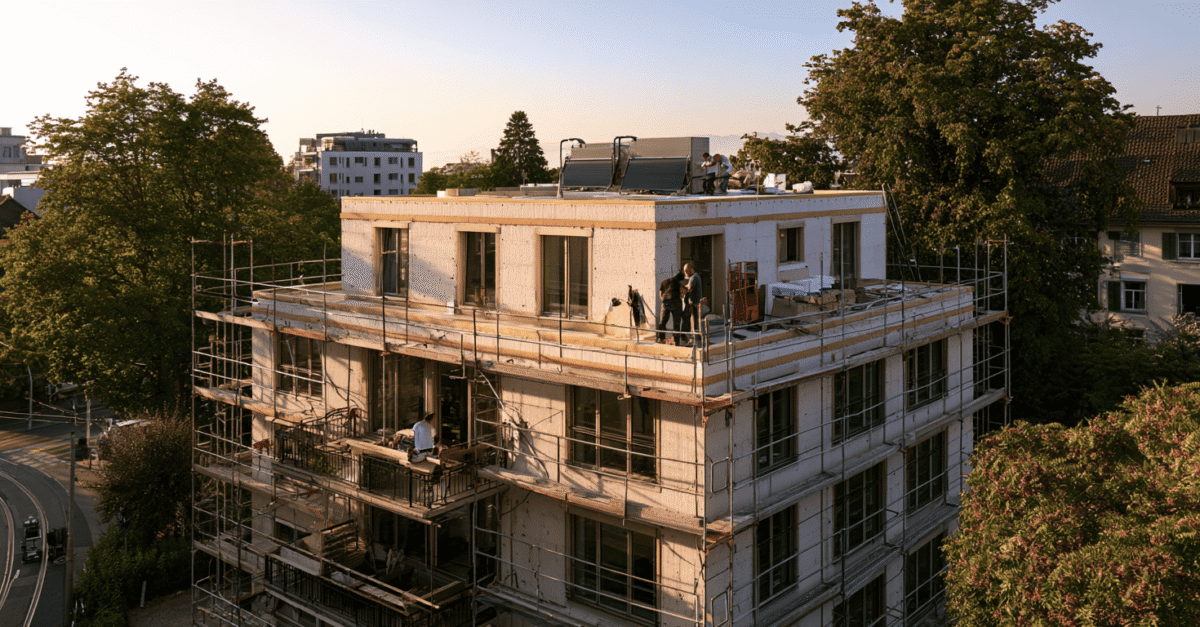
The largest portion of funding in the Building Program went to building services, totaling 186 million Swiss francs. Another 145 million went to thermal insulation, and 106 million to comprehensive renovations. Specifically, 20,097 oil, gas, or electric heating systems were replaced. Heat pumps were installed in 82 percent of these cases. In addition, 1.5 million square meters of roof area and 0.8 million square meters of facade area were renovated, spread across approximately 9,200 buildings.
New Funding Window for Large Systems
The incentive program specifically complements the existing system in areas where replacement has been particularly slow to date. Since the beginning of 2025, funding has been provided for, among other things, decentralized electric resistance heating systems, larger fossil-fuel heating systems exceeding 70 kilowatts, and a bonus for the building envelope in cases of comprehensive renovations. According to the Swiss Federal Office of Energy, approximately 4,350 of the nearly 4,800 applications submitted were approved.
This is crucial for the construction and real estate sectors because it shifts the focus of funding not only to single-family homes but also to larger properties and more complex heating systems. Particularly for multi-family homes, large complexes, and larger existing properties, the funding framework often determines whether the replacement of fossil-fuel-powered systems takes place immediately or is postponed yet again.
Impact Over the Lifecycle
The measures funded in 2025 are expected to save 12.1 billion kilowatt-hours of energy and 3.3 million metric tons of CO₂ over their entire lifecycle. Since the launch of the Building Program in 2010, the expected savings over the life cycle total 116 billion kilowatt-hours and over 30 million metric tons of CO₂, according to the federal government. Buildings thus remain one of the most significant levers of Swiss energy policy, as they continue to account for nearly 40 percent of energy consumption and about a quarter of CO₂ emissions.
The next test will be sustaining this momentum. The stimulus program is designed as a temporary supplement and is intended to have an impact precisely in those segments where the existing subsidy system has failed to generate sufficient momentum. Whether this additional boost will permanently increase the renovation rate for large existing buildings will be one of the key questions for cantons, property owners, and the building services industry in the coming years.