
On August 20, 2026, a court in Shenzhen sentenced Hui Ka Yan to life in prison and ordered the confiscation of all his personal assets. The judges found him guilty of large-scale financial fraud, illegal fundraising, and bribery between 2016 and 2021. This marks a major legal setback for the iconic figure of China’s debt boom. For the housing market, however, the verdict does not spell the end of the story.
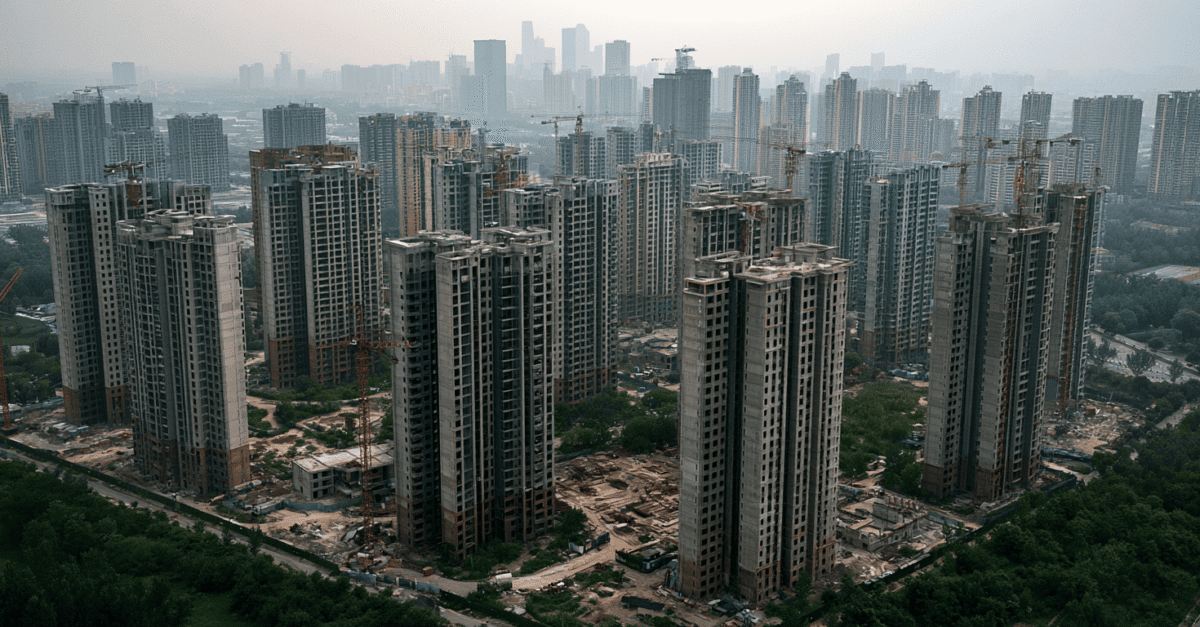
The reason lies in the sheer scale of the collapse. The conglomerate that Hui had built up in 1996 collapsed in 2021 under liabilities of approximately $300 billion. At the heart of the crisis were approximately 1.6 million apartments that had already been sold but remained unfinished. Some have since been completed or handed over, but problematic projects continue to burden buyers, financing, and construction activity.
The verdict does not clear away the structural shell
Hui was found guilty not solely because of a failed business model, but because of manipulated financial statements and improper cash flows. This, in particular, makes the case all the more serious for the real estate industry. Where presales, debt financing, and a constant stream of new land purchases drove growth, window-dressing of balance sheets quickly turns into systemic damage. The confiscation of Hui’s assets is intended to benefit those who suffered losses, but it can hardly close the gap.
The scale of the problem is evident at Hengda Real Estate, the most important mainland subsidiary. There, liabilities recently stood at around 2.4 trillion yuan. Even if a significant portion of Hui’s former assets were still available, the shortfall would remain enormous. This explains why the resolution of the situation will not be decided in the courtroom, but rather on construction sites, in creditor proceedings, and through the reorganization of stalled projects.
The liquidation process is moving into its next phase
Just one day after the ruling, Chinese courts announced the next tough step. In Guangzhou, bankruptcy liquidation proceedings against Hengda Real Estate were approved. For owners, creditors, and authorities, the focus is thus shifting even more strongly to the question of which projects can continue construction, be sold, or be liquidated in an orderly manner. For residential construction in particular, it remains crucial whether unfinished developments will be completed or, as shells, will continue to tie up capital and erode confidence.