
On 19 November 2026, the City Council approved the necessary planning documents and, at the same time, authorised a project planning grant of around 2.6 million Swiss francs. This will enable Bern to press ahead with the planning framework for the extension of the current temporary facility in Neufeld and to initiate further project planning.
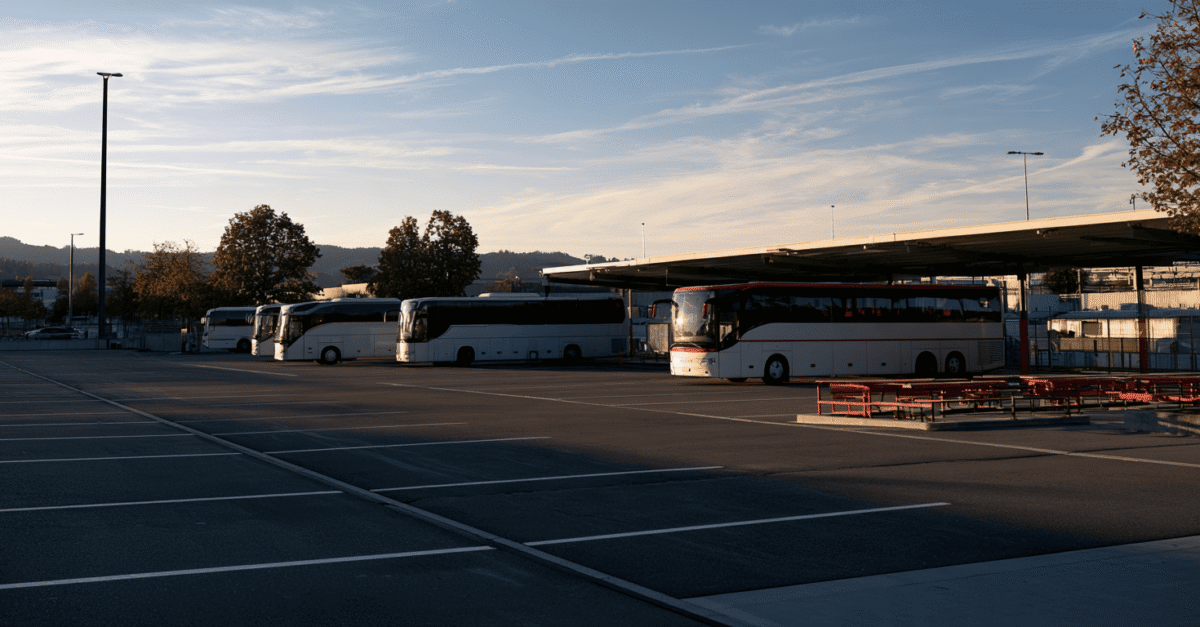
The political timetable is tight. The City of Bern intends to put the proposal to a public vote on 28 February 2027. Amendments to the zoning plan and building regulations are required so that a fully-fledged long-distance and coach terminal can be built on the site. The current site has been operating on a temporary basis since 2009 and, according to the city, has neither a building nor permanent toilet facilities nor shelter from the elements.
Multi-million project with funding window
The city estimates the total cost of the new building at between 8.2 and 10.5 million Swiss francs. If construction begins in time, Bern can secure contributions from the federal government and the canton under the agglomeration programme. In this case, the city’s net investment costs would amount to between 5.2 and 7.5 million Swiss francs. As early as the beginning of 2025, the City Council had stipulated that this co-funding is conditional upon construction commencing by March 2029 at the latest.
Parliament will only decide on the actual construction loan once the detailed project plans are available. The city expects a parliamentary decision on this in 2028. The new terminal is scheduled to open in the second half of 2030.
Parking to be moved out of the city centre
In parallel with the construction project, Bern is introducing city-wide parking charges for coaches. These form part of the new city-wide coach regime and are intended to gradually redirect parking from the city centre to Neufeld. For the site, this is more than just traffic regulation. It is intended to ensure that the future terminal can be operated economically and take on a clearer role as a central coach hub.
The City Council also requested that, during the planning phase, as many traffic areas as possible be considered for permeable surfaces. This shows that the debate has long since moved beyond simply a reception building to include the design of sealed surfaces and the quality of the site.