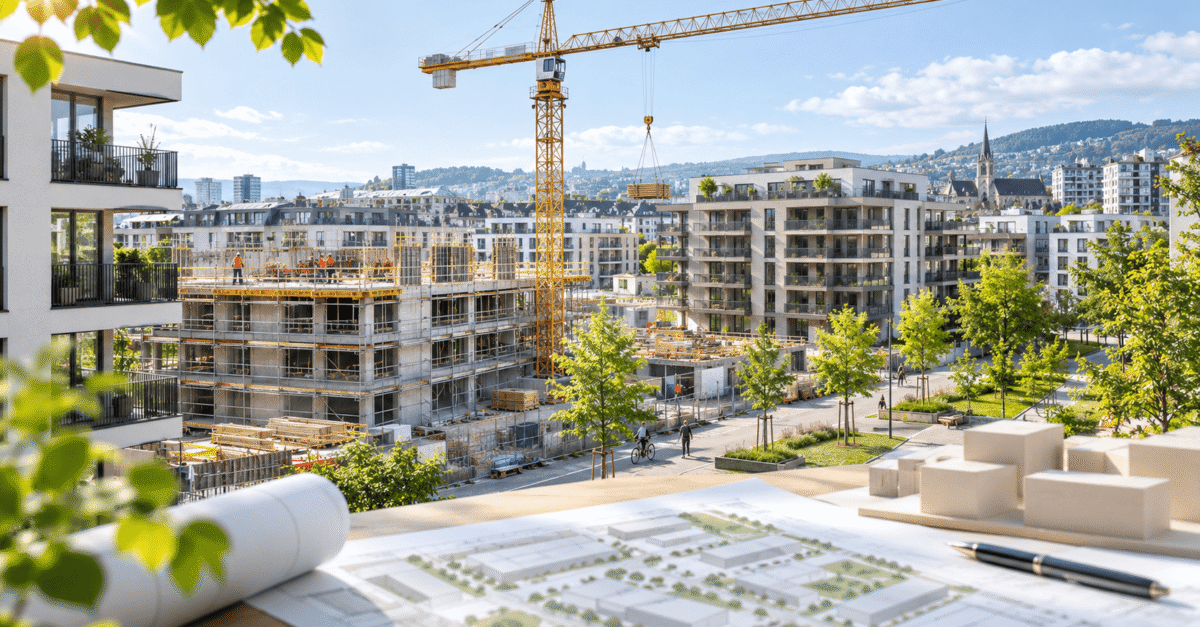

The development of the Lehenmatt site in Basel began with its acquisition by Intershop in 2006. In the years that followed, the planning requirements for a comprehensive redevelopment were established.
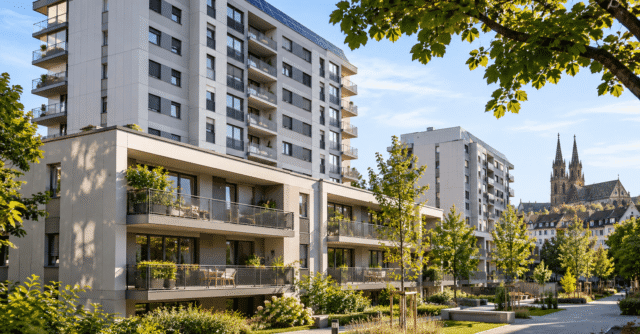
A new zoning plan allowed for additional residential space within the existing residential area. Instead of demolishing the existing high-rise residential buildings, the company decided to retrofit them for energy efficiency and expand their structure.
68 additional apartments without evictions
A total of 264 existing apartments were modernized. The renovation was carried out without any tenant evictions. In addition, 68 new apartments were created through additions to the high-rises.
The existing local shopping center was also replaced by a new building. The energy-efficient renovation and the expansions received certification under the Swiss Standard for Sustainable Construction, earning a Gold rating.
The project illustrates the potential that existing residential complexes offer for infill development.
Development Creates Additional Real Estate Value
Upon completion of the work, Intershop will sell the properties to a Swiss investment foundation. The handover is scheduled for the end of 2026.
In connection with the transaction, Intershop raised its profit forecast. For the full fiscal year, the company now expects a pre-tax gain on sales of 90 to 95 million Swiss francs. This amount refers to the expected annual result from sales and not exclusively to the Lehenmatt project.
For the real estate industry, this development serves as an example of the economic opportunities offered by infill development.
Through the addition of new apartments, energy-efficiency improvements, and the long-term enhancement of existing buildings, new real estate value can be created without the need to develop an entirely new construction site.
However, the project also highlights the significant time required for such developments. Approximately 20 years elapse between the acquisition of the property and its sale. For investors, therefore, not only construction costs and returns but also planning duration and capital commitment are decisive factors.