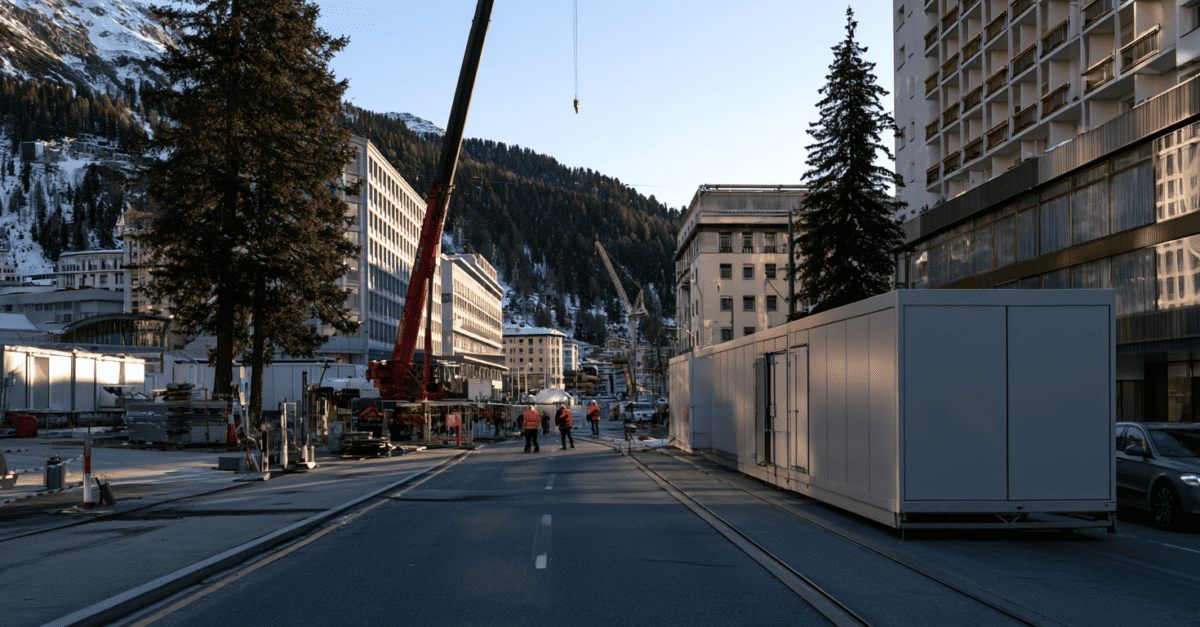

The new cap is not a symbolic measure, but a direct response to a noticeable expansion surrounding the annual meeting. Back in spring 2026, Davos had already announced that it would, for the first time, impose quotas on temporary WEF structures and changes of use, as infrastructure, security checks and staffing resources were reaching their limits.
According to the municipality, a total of 190 applications were received for the 2027 WEF. The town council reviewed 146 projects. Twenty-one of these did not meet the requirements and will not be granted permission. This leaves 125 projects within the newly set cap. This affects temporary structures, the repurposing of existing spaces and other temporary measures in the vicinity of the annual meeting.
Traffic, housing and enforcement
The municipality justifies the intervention on the basis of specific local consequences. Additional temporary uses attract more visitors and extra operational staff. This exacerbates traffic in Davos and increases the pressure on the already scarce housing stock. At the same time, the workload involved in inspections – for example, regarding fire safety – increases during a period when many projects must be assessed and monitored within a short timeframe.
Points system determines permits
The selection process followed a multi-stage procedure. Initially, the completeness of the documentation, the end users and the date of submission were taken into account. Penalty points were awarded to applications from operators who had been sanctioned in previous years for misconduct. In the event of a tie, a second assessment was carried out using criteria such as sustainability, innovation, use of public land, and passenger boarding and alighting areas. If the scores remained equal after this, the decision was made by drawing lots.
For owners, landlords and organisers along the promenade, this means the WEF market is changing noticeably. Those wishing to use spaces on a temporary basis are no longer competing solely for locations and visibility, but also for a strictly limited number of authorised spaces. For the first time, the physical density of the event is thus subject to an administrative cap.